
Email Id: sale@adctooling.com
Choosing the right Wax Pen Atomizer is less about appearance and more about controlled heating, material safety, and daily reliability. A small ceramic chamber can produce cleaner flavor, while a quartz coil often delivers quicker heat and a more direct profile. Titanium may offer durability, but its maintenance demands closer attention. These differences become noticeable when the device warms unevenly or leaves residue around the chamber.
Industry data also needs careful reading. Grand View Research and Fortune Business Insights track vaporizer hardware within broader e-cigarette and vapor product categories, rather than isolating every Wax Pen Atomizer design. Their reports still show growing interest in portable, rechargeable vapor devices and improved heating systems. However, market growth does not prove that every atomizer is safe or well made. That assumption needs questioning.
Dr. Konstantinos Farsalinos, a physician and aerosol researcher, has stated, “The main concern is not the nicotine, but the toxicants.” Although his comment does not address every wax device directly, it highlights an important selection principle: heating materials and aerosol quality deserve more attention than styling. This guide compares ceramic, quartz, coil, and hybrid atomizers through that lens. It examines temperature control, chamber size, airflow, battery compatibility, cleaning effort, and manufacturer documentation. Look for compliant materials, clear specifications, and tested components. Avoid vague claims.
There is no perfect choice.
A practical decision also depends on how often the device is used, how much maintenance feels realistic, and whether replacement parts remain available. Some comparisons simplify these factors too much. This one may, too. Still, a careful framework can reduce costly mistakes and support more informed, lawful purchasing decisions.
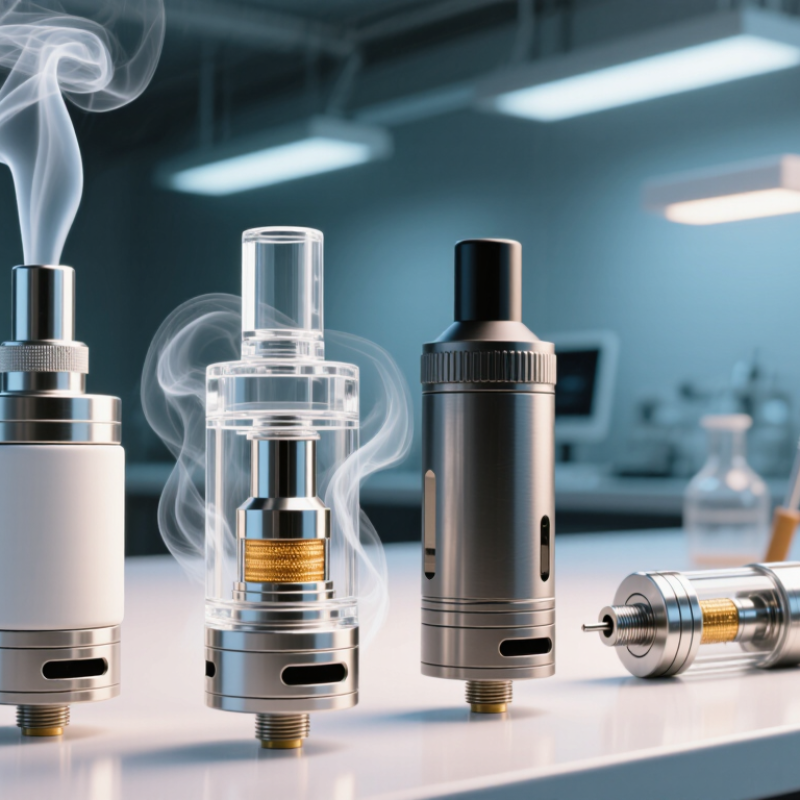
Wax Pen Atomizer Basics and Their Role in Vapor Production
An atomizer converts controlled electrical heat into vapor. Its chamber, heating element, airflow, and surface material shape that process. Ceramic atomizers usually provide even heating and a clean flavor profile. Quartz heats faster, but temperature can feel less forgiving. Coil designs often deliver stronger output, although they may require more careful cleaning. Small details matter.
Grand View Research estimated the global e-cigarette and vape market at USD 28.17 billion in 2023. Its report projects a 30.6% compound annual growth rate from 2024 to 2030. These figures cover broader devices, not atomizers alone. Still, they show rising demand for compact vapor hardware. Market estimates vary, so readers should check each report’s definitions and research date.
Choosing an atomizer starts with intended legal use, material quality, and temperature control. A ceramic chamber suits users who value steady heating. Quartz may fit those wanting quick response and sharper flavor. Coil systems can produce dense vapor, but residue may collect around exposed wire. That affects taste and maintenance. No atomizer is perfect. I still question simple claims about “pure flavor,” because airflow, power, and cleaning habits change the result. The U.S. National Institute of Standards and Technology emphasizes measurement consistency in thermal systems, yet consumer devices rarely offer laboratory-level control. A practical test remains modest: inspect the chamber, use approved materials, avoid overheating, and monitor vapor consistency over several sessions.
| Atomizer Type | Heating Structure | Vapor Production | Flavor Profile | Heat-Up and Response | Residue and Cleaning | Main Advantages | Common Limitations | Best Use Case |
|---|---|---|---|---|---|---|---|---|
| Ceramic Cup | A porous or glazed ceramic chamber heats the concentrate directly without an exposed metal coil. | Moderate to high, with even heat when the chamber is fully warmed. | Clean and relatively neutral because the concentrate contacts ceramic rather than a metal coil. | Usually slower to heat than exposed-coil designs; heat is retained well between draws. | Residue can build up in the chamber, but the smooth surface is generally simple to swab after cooling. | Even heating, good thermal stability, and reduced risk of direct coil contact. | May require longer preheating and can deliver less immediate intensity than quartz coil designs. | Users who prioritize balanced vapor, consistent sessions, and a smooth ceramic heating surface. |
| Ceramic Donut | A ring-shaped ceramic heating element surrounds or sits beneath the concentrate surface. | Moderate and steady, with a smooth release of vapor rather than an aggressive burst. | Clean and gentle, especially at lower power levels. | Moderate heat-up time with good heat distribution around the load. | Typically easy to maintain, although reclaim may collect around the inner ring and airflow openings. | Low likelihood of exposed-wire taste, even heating, and a controlled vapor path. | Can produce less dense vapor when operated at conservative temperatures or with very large loads. | Flavor-focused sessions and users who prefer controlled, moderate vapor production. |
| Quartz Coil | A resistance wire is wrapped around or attached to a quartz rod, wick, or coil-support structure. | High, with rapid vapor generation when the coil reaches operating temperature. | Good flavor at moderate power; higher heat can create a harsher or more roasted taste. | Fast heat-up and quick response to button activation. | Quartz surfaces are usually easy to swab, but exposed coils can trap residue and require careful cleaning. | Strong vapor, fast response, and compatibility with compact designs. | Coils can wear out, accumulate residue, or develop uneven heating after repeated use. | Users who want dense vapor quickly and do not mind replacing or cleaning the coil periodically. |
| Dual Quartz Rod | Two quartz rods are heated by resistance wire to increase the contact area with the concentrate. | High to very high, depending on airflow, battery output, and load size. | Rich flavor at moderate settings, with a fuller vapor profile than many single-coil designs. | Fast heat-up and strong heat transfer across a broader surface area. | Residue may collect between the rods; cleaning should be done only after the chamber has cooled. | Large vapor volume, quick extraction, and good performance for medium-sized loads. | Higher power demand, more visible residue, and a greater chance of overheating the concentrate. | Experienced users who want powerful sessions and high vapor output. |
| Ceramic Rod with Wick | A ceramic rod is combined with a porous wick that holds concentrate close to the heated surface. | Moderate to high, with consistent vapor while the wick remains adequately saturated. | Generally smooth, although the wick can influence taste if it becomes heavily saturated or overheated. | Quick to moderate heat-up; the wick helps maintain contact between the concentrate and heater. | More difficult to clean thoroughly because reclaim can remain inside the wick material. | Convenient loading, steady feeding, and consistent performance during repeated draws. | Wick saturation may affect flavor and vapor consistency; the wick is not always replaceable separately. | Users seeking simple operation and steady vapor without repeatedly placing concentrate on an exposed coil. |
| Flat Ceramic Plate | A flat ceramic heating plate vaporizes concentrate placed directly on its surface. | Moderate, with broad but comparatively gentle heat transfer. | Clean and mild when used at controlled power levels. | Moderate heat-up with stable surface temperature after preheating. | Usually straightforward to wipe clean, although excess concentrate can spread across the plate. | Simple design, even surface heating, and low exposure to metal heating wires. | May require careful loading to prevent flooding and may produce lighter vapor than coil-based chambers. | Low-temperature sessions, flavor preservation, and users who prefer a simple chamber layout. |
| Hybrid Ceramic and Quartz | Combines a ceramic chamber or cup with a quartz insert, rod, or secondary heating surface. | High and adjustable, depending on which surface receives the concentrate and how heat is distributed. | Balanced flavor with the clean character of ceramic and the responsive heating behavior of quartz. | Moderate to fast heat-up, with improved thermal control compared with many single-material designs. | Cleaning is more involved because different surfaces may collect reclaim at different rates. | Versatile vapor production, broad temperature behavior, and a compromise between smoothness and intensity. | More parts can increase maintenance requirements, weight, and replacement cost. | Users who want flexibility between flavor-oriented and high-output sessions. |