2026 How to Choose the Best Electric Forklift Battery?
Choosing the right Electric Forklift Battery is crucial for operational efficiency and cost-effectiveness. Research indicates that battery performance impacts overall productivity by up to 30%. With the increasing demand for efficient warehouse operations, selecting the best battery can make a significant difference.
Different types of Electric Forklift Batteries offer varying benefits. Lithium-ion batteries, for instance, have a longer lifespan and faster charging times compared to lead-acid counterparts. According to a 2023 industry report, companies report reduced downtime by 25% when leveraging lithium-ion technology. However, initial costs can deter some businesses from making the switch.
Understanding battery specifications is essential. The wrong choice can lead to reduced performance and costly replacements. Evaluating factors like capacity, lifespan, and maintenance needs will help avoid common pitfalls. As the market evolves, keeping up with advancements in battery technology is necessary for informed decision-making.
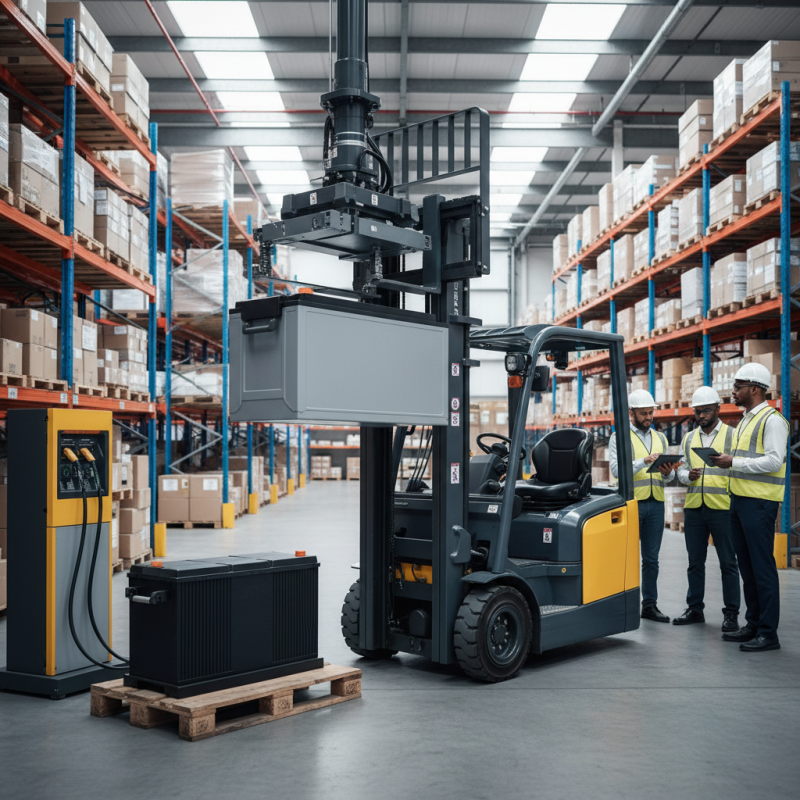
Understanding Electric Forklift Battery Types and Technologies
Understanding electric forklift battery types and technologies is crucial for optimizing warehouse operations. Lithium-ion batteries are gaining attention for their efficiency and longer lifespan. Compared to traditional lead-acid batteries, they can operate for 3 to 5 times longer. A report from the Material Handling Industry shows that lithium-ion batteries can increase operational productivity by up to 30%. However, the initial investment is significantly higher. Some businesses might hesitate to adopt this technology due to upfront costs.
Lead-acid batteries remain popular due to their affordability. They are well-known and widely used in many industries. However, they require regular maintenance and can reduce operational efficiency if not managed properly. A recent industry survey indicated that 40% of companies experienced downtime due to battery-related issues. Understanding the trade-offs between these technologies is essential. Choosing the right battery impacts not just costs, but also productivity and efficiency.
There is still room for innovation in battery technology. New developments such as solid-state batteries promise increased safety and energy density. These advancements could shift market trends. Companies need to stay updated on these changes. Ignoring the evolution in battery technologies could mean falling behind competitors. The right battery choice isn't just about today; it’s about planning for the future.
2026 How to Choose the Best Electric Forklift Battery? - Understanding Electric Forklift Battery Types and Technologies
| Battery Type | Chemistry | Cycle Life | Charging Time | Weight | Cost ($) |
| Lead-Acid | Lead-Acid | 500-1500 Cycles | 8-10 Hours | 500-2000 lbs | 1,500 - 3,000 |
| Lithium-Ion | Lithium-Ion | 2000-5000 Cycles | 1-3 Hours | 300-1000 lbs | 5,000 - 10,000 |
| Nickel Cadmium | Nickel-Cadmium | 1500-3000 Cycles | 5-8 Hours | 1000-2500 lbs | 2,000 - 4,500 |
| Gel Cell | Gel Lead-Acid | 500-1200 Cycles | 6-12 Hours | 500-1500 lbs | 1,200 - 2,500 |
| Absorbent Glass Mat (AGM) | Lead-Acid | 1000-2000 Cycles | 4-6 Hours | 800-2000 lbs | 1,800 - 3,500 |
Evaluating Battery Capacity and Performance for Forklift Operations
When choosing an electric forklift battery, evaluating battery capacity and performance is crucial. Battery capacity is measured in amp-hours (Ah) or kilowatt-hours (kWh). Higher capacity typically translates to longer runtime. For example, a battery with 600 Ah can support operations for up to eight hours, depending on the load. However, it’s essential not only to focus on capacity but also on how the battery performs under specific conditions.
Performance metrics, such as discharge rate and cycle life, are equally important. A battery may have a high capacity, but if it can only handle a shorter discharge time, it may not be suitable for your needs. Industry reports indicate that lead-acid batteries offer around 500 cycles, while lithium-ion batteries can exceed 2,000 cycles. This difference can impact long-term costs and operational efficiency.
Additionally, keep in mind the environment in which the forklift operates. Extreme temperatures can affect battery performance. A battery may perform well in moderate conditions but may struggle in colder or hotter settings. This highlights the need for thorough evaluation before making a selection. A well-rounded understanding of both capacity and performance will ensure optimal forklift operations.
Factors Influencing Battery Life and Maintenance Requirements
Choosing the right battery for your electric forklift is crucial. Battery life and maintenance are affected by various factors. Understanding these can help you make informed decisions.
Temperature plays a significant role in battery performance. Extreme heat or cold can reduce efficiency and lifespan. Ensure the charging area is climate-controlled. Monitor the battery's temperature regularly. This simple step can prevent overheating or freezing.
Regular maintenance is another key aspect. Check water levels in flooded lead-acid batteries frequently. A well-maintained battery will last longer. Don't neglect routine cleaning. Keep battery terminals free of corrosion. It helps in maintaining proper connections.
Tips: Always match the battery to the forklift's specific needs. Overloading the battery can damage it. Also, observe the charging cycle. Avoid deep discharges whenever possible. Implementing these strategies can greatly enhance battery life.
2026 Electric Forklift Battery Life and Maintenance Requirements
This chart illustrates the average battery life of various electric forklift batteries. Lead-acid batteries typically last around 5 years, while lithium-ion batteries can last up to 10 years, significantly reducing maintenance and replacement costs over time. Understanding battery life is crucial for effective maintenance and operational efficiency.
Determining Battery Compatibility with Forklift Models
When choosing an electric forklift battery, compatibility with your forklift model is crucial. Each forklift design has specific requirements. A mismatched battery can lead to performance issues or even safety hazards. Understanding your forklift model is the first step. Check the manufacturer’s specifications for battery capacity and voltage.
Consider the power needs of your operations. Some tasks require higher energy output. This means selecting a battery that supports those demands. Consider both the operational environment and the weight capacity of the forklift. A heavier battery may affect maneuverability.
Compatibility also includes dimensions and connector types. If the battery does not fit properly, it can cause alignment problems. Additionally, double-check the warranty and support options for the battery. A short warranty might indicate lesser quality.
Investing in a compatible battery enhances reliability and performance. Reflect on these factors carefully to avoid future setbacks.
Cost Considerations and Budgeting for Electric Forklift Batteries
When budgeting for electric forklift batteries, several cost factors emerge. The initial investment can vary widely. According to industry reports, high-quality lithium-ion batteries range from $5,000 to $10,000. Lead-acid options may be more affordable initially, averaging between $3,000 and $5,000. However, these lower upfront costs can lead to higher operational expenses over time.
Maintenance plays a significant role in the overall cost. Lithium-ion batteries require minimal maintenance, while lead-acid batteries need regular watering and inspections. This can accumulate costs, as maintenance may be about 20% to 30% of total battery expenses. Additionally, battery lifespan varies. Lithium-ion batteries typically last 5 to 7 years, whereas lead-acid batteries can require replacement every 3 to 5 years. Businesses often overlook these factors, leading to unplanned expenses.
Another critical consideration is charging infrastructure. Installing fast chargers can add significant costs upfront, sometimes exceeding $15,000. Depending on your operation's size and needs, developing a suitable charging system is essential. The choice between upfront cost and long-term savings can be a challenging decision, warranting careful analysis of your operational needs.