Why Choose an Industrial PC for Your Business Needs?
In today’s rapidly evolving technological landscape, businesses are frequently faced with the challenge of selecting the right computing solutions. An Industrial PC stands out as a robust option, specifically designed to withstand harsh environments. According to a report by MarketsandMarkets, the industrial PC market is projected to grow from USD 4.2 billion in 2021 to USD 6.8 billion by 2026, reflecting a compound annual growth rate (CAGR) of 10.4%. This growth highlights the increasing reliance on Industrial PCs across various sectors.
These specialized systems offer enhanced durability, reliability, and performance compared to standard PCs. They can operate in extreme temperatures, resist dust and moisture, and endure vibrations. A survey conducted by Frost & Sullivan indicates that 75% of companies using Industrial PCs reported improved operational efficiency. However, businesses should carefully assess their specific needs before making a purchase. Not all Industrial PCs are built the same; the right choice depends on application requirements, budget constraints, and long-term goals.
Furthermore, the integration of Industrial PCs into existing systems requires proper planning. Companies must consider scalability and future technological advancements. Without a thorough evaluation, businesses risk investing in capabilities that may become obsolete. Thus, understanding the true value of an Industrial PC is crucial in leveraging its potential to meet business objectives.
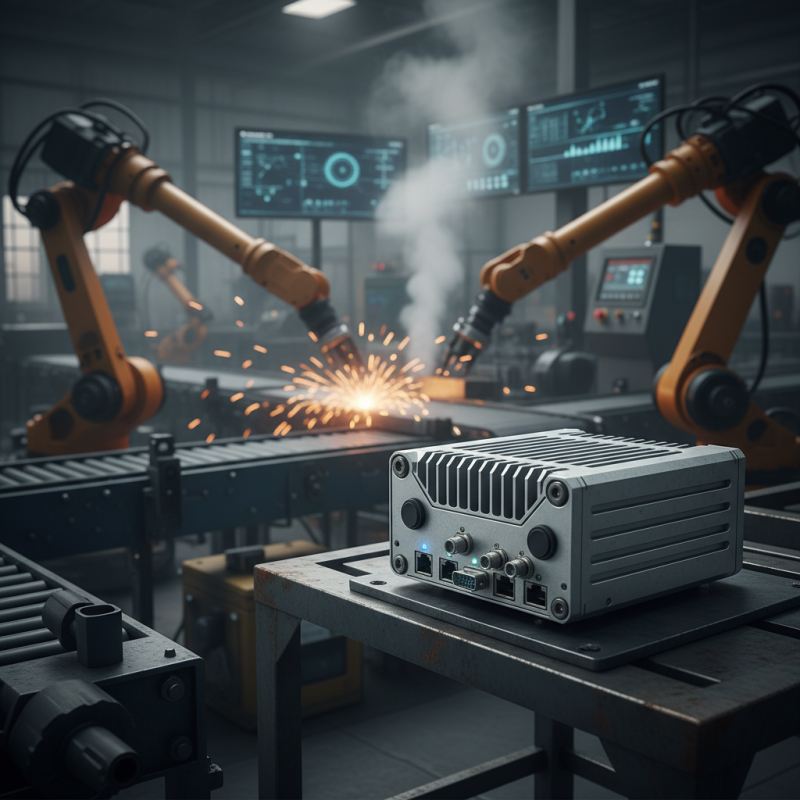
Advantages of Industrial PCs over Commercial PCs in Harsh Environments
Industrial PCs are designed for tough environments, making them a superior choice for businesses. In contrast to commercial PCs, industrial models endure extreme temperatures, humidity, and vibrations. Their rugged build ensures longevity. This reliability is vital in manufacturing, logistics, and other sectors that operate under demanding conditions.
When choosing an industrial PC, consider its protection rating. Devices with IP ratings of 65 or higher offer excellent dust and moisture resistance. This feature is crucial in preventing equipment failure. Ensure your PC has an extended temperature range, typically -20°C to 70°C. Such specifications maximize uptime and productivity.
Tips for maintenance: Regularly inspect your industrial PC for dust buildup. A simple cleaning can enhance performance. Use proper cooling solutions to prevent overheating. Remember, an industrial PC can fail in critical moments. Prioritize consistent monitoring and timely updates for software and hardware. This will help maintain efficiency and prevent unexpected issues.
Market Growth of Industrial PCs: Statistics and Trends in 2023
The market for industrial PCs is experiencing robust growth in 2023. According to a recent report by Allied Market Research, the global industrial PC market is projected to reach $5.12 billion by 2027, growing at a CAGR of 5.4%. This uptick is largely driven by increased automation and the demand for smart manufacturing solutions. Industries are recognizing the benefits of enhanced performance and reliability that industrial PCs bring to their operations.
As automation technologies continue to advance, many businesses are investing in industrial PCs to streamline their processes. A study from Mordor Intelligence highlights that the manufacturing sector is one of the largest consumers of industrial PCs, accounting for nearly 35% of the market share. This trend is expected to persist, with companies seeking solutions that can withstand harsh environments. The need for rugged hardware is vital for minimizing downtime and maintaining productivity.
Tip: When considering an industrial PC, assess the specific environment it will operate in. Extreme temperatures and dust levels can impact performance. Be sure to select a model designed for your unique needs.
While the growth statistics are promising, businesses must not overlook the importance of thorough testing and integration. Implementing new technology comes with risks. Companies should also prepare for potential compatibility issues with existing systems. Evaluating all these factors is essential for successful implementation.
Market Growth of Industrial PCs: Statistics and Trends in 2023
| Region | Market Size (Million USD) | Growth Rate (%) | Key Applications |
| North America | 1,200 | 6.5 | Manufacturing, Automation |
| Europe | 1,000 | 5.8 | Energy, Healthcare |
| Asia-Pacific | 1,800 | 7.0 | Transportation, Telecommunications |
| Latin America | 400 | 4.5 | Mining, Agriculture |
| Middle East & Africa | 300 | 3.8 | Oil & Gas, Construction |
Cost Efficiency: Long-Term Savings of Industrial PCs in Business Operations
When considering cost efficiency, industrial PCs prove to be a smart investment for businesses. These computers are built to last in challenging environments. They often come with a higher upfront cost, but the long-term savings far outweigh this initial expense. Reduced downtime due to improved durability leads to significant savings over time. Companies can focus more on productivity rather than constant repairs or replacements.
Moreover, industrial PCs consume less power compared to standard computers. This energy efficiency lowers operational costs, especially for businesses running 24/7. Automation and remote monitoring become seamless with industrial PCs. They offer reliability and consistent performance that minimizes unexpected disruptions. However, some companies may overlook the benefits due to short-term thinking. They might choose cheaper options without realizing the hidden costs associated with maintenance and replacement.
Investing in an industrial PC requires careful consideration. While the initial investment can be daunting, the reduced need for maintenance, combined with energy savings, can lead to substantial profits. Businesses must weigh these factors seriously. Sometimes, what seems like a costly choice today can prove to be the most economical in the long run.
Reliability and Durability: Performance Metrics of Industrial PCs
When considering the performance metrics of industrial PCs, their reliability and durability stand out. These systems often operate in extreme conditions, such as high temperatures and dust-prone environments. Reports indicate that industrial PCs boast a Mean Time Between Failures (MTBF) of over 50,000 hours, compared to less than 30,000 hours for standard commercial PCs. This statistic highlights the enhanced engineering that goes into industrial systems, designed to meet the rigors of demanding applications.
Moreover, the design of industrial PCs often includes features like shock and vibration resistance. A study by research firm IHS Markit states that nearly 65% of industrial downtime can be traced back to hardware failures. This statistic underscores the importance of investing in machines that can withstand physical stress. Furthermore, the long lifecycle of industrial PCs—often exceeding seven years—provides businesses with a cost-effective solution when viewed through the lens of total cost of ownership.
Venturing into an industrial PC may yield challenges. For example, some users report a steep learning curve when transitioning from consumer models. While industrial PCs offer superior performance, integration into existing systems may require substantial adjustments. This reflection leads to the realization that with high reliability comes the necessity for proper deployment and maintenance strategies.
Customization and Flexibility: Tailoring Industrial PCs to Specific Applications
In today's rapidly evolving industrial landscape, customization is key. Industrial PCs offer the flexibility to adapt to specific business applications. They can be tailored to meet unique requirements, ensuring efficiency and effectiveness. A recent industry report highlighted that 70% of companies feel that customized solutions improve operational performance.
Industries like manufacturing and automation benefit from modular designs. Businesses can choose components based on their environment. For instance, a temperature-resistant casing may be crucial in harsh settings. This adaptability allows for efficient use of resources, contributing to a more sustainable approach. Furthermore, specialized software can be integrated, enhancing functionality.
However, not all customization efforts lead to desired outcomes. Companies must align their needs with available technologies critically. In some cases, excessive customization can result in higher costs and longer implementation times. It's essential to strike a balance between personalization and practicality. Understanding your specific requirements ensures a more effective deployment of industrial PCs.