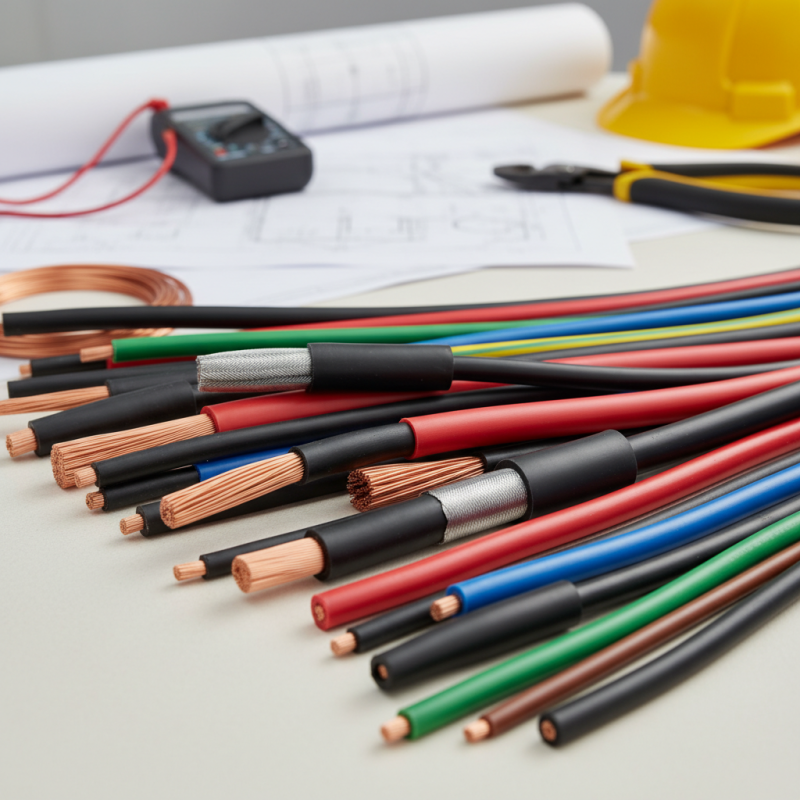
2026 How to Choose the Right Wires and Cables for Projects?
Choosing the right wires and cables for your projects is crucial. The proper selection impacts performance and safety. Understanding "Провода и Кабели" is essential to make informed decisions.
Different projects require different specifications. For example, home wiring differs from industrial applications. Consider the material, gauge, and insulation type. Each factor affects durability and conductivity.
It's important to ensure compatibility with your devices. Miscalculating requirements can lead to failures or hazards. Take time to research. Consulting with professionals can provide valuable insights. Remember, the right choice brings long-term benefits.
Understanding Different Types of Wires and Cables for Various Applications
Choosing the right wires and cables for your electrical projects can be daunting. It’s vital to understand the different types available. This knowledge can significantly affect the efficiency and safety of your work. For instance, copper wires are excellent conductors, but they can be more expensive than aluminum. In contrast, aluminum wires are cost-effective but may not conduct electricity as well, especially over longer distances.
Consider the specific application when selecting wires. For residential wiring, NM (non-metallic) cables are commonly used. They are flexible and easy to install. However, outdoor projects require weather-resistant cables, like UF (underground feeder) cables. Additionally, specific scenarios may benefit from shielded cables, which reduce electromagnetic interference.
Understanding insulation types is also crucial. Some insulations can handle higher temperatures, while others are more suited for moist environments.
Mistakes can happen when choosing. It’s easy to overlook voltage ratings or amperage limits. This oversight may result in overheating or short circuits. Always double-check specifications against your project needs. Don’t hesitate to seek advice from professionals if uncertain. They can guide you toward safer and more effective choices for wires and cables.
Key Factors to Consider When Selecting Wires for Electrical Projects
When selecting wires and cables for electrical projects, several key factors come into play. Understanding the specific requirements of your project is crucial. Start by assessing the voltage and current ratings you need. Each wire type has a unique capacity and insulation rating. Overloading a wire can lead to dangerous situations. Always choose wires that can safely handle your project's electrical loads.
Another factor is the environment where the wires will be used. Will they be exposed to moisture, chemicals, or extreme temperatures? Different materials offer varied resistance to these conditions. For instance, thermoplastic insulated wires can resist certain chemicals, making them ideal for harsh environments.
The gauge of the wire is also essential. A thinner wire may save money, but it could also pose risks due to overheating. Conversely, using thicker wire than needed results in unnecessary costs. Experience plays a significant role here. Reading guidelines and consulting professionals can provide insights that personal experience might not cover. Remember, the most reliable choices often come from a blend of knowledge and practical experience.
Evaluating Insulation Materials and Their Impact on Wiring Performance
Choosing the right insulation material is crucial for any wiring project. Insulation directly affects the wire's ability to perform under various conditions. Different materials offer unique benefits, and selecting the right one can enhance safety and efficiency. Common options include PVC, rubber, and thermoplastic. Each material has distinct thermal and electrical properties.
For instance, PVC is often chosen for its balance of durability and flexibility. It performs well in general-purpose applications. Rubber insulation offers superior elasticity, making it suitable for environments with extreme temperature fluctuations. Thermoplastics tend to excel in conditions that require moisture resistance. However, the complexity of these choices can be daunting.
It's essential to reflect on the environmental factors your project will encounter. What works well in one scenario might not be ideal in another. Consider if the wire will be exposed to heat, moisture, or chemicals. Understanding these aspects may lead to challenging decisions. Ensuring you select the correct insulation can significantly impact the longevity and safety of your installation.
2026 How to Choose the Right Wires and Cables for Projects? - Evaluating Insulation Materials and Their Impact on Wiring Performance
| Insulation Material | Temperature Rating (°C) | Voltage Rating (V) | Chemical Resistance | Application Suitability |
| PVC (Polyvinyl Chloride) | 70 | 300 | Moderate | General Wiring |
| XLPE (Cross-Linked Polyethylene) | 90 | 600 | High | Industrial Applications |
| EPR (Ethylene Propylene Rubber) | 90 | 600 | Excellent | High Voltage Applications |
| Silicone | 150 | 300 | Good | High Temperature Environments |
| Neoprene | 90 | 600 | Very Good | Outdoor and Harsh Environments |
Assessing Voltage Ratings and Current Capacity for Safe Usage
When selecting wires and cables, understanding voltage ratings is crucial for safe project execution. Voltage ratings indicate the maximum voltage a wire can handle without risk of failure. If the voltage exceeds this rating, electrical arcing or insulation breakdown can occur, leading to short circuits and potential hazards. Always check the voltage of your power source. Use wires rated higher than this value for safety.
Current capacity, or ampacity, is equally important. It defines the maximum current a wire can carry. Exceeding this capacity can cause overheating and fire hazards. Consider the wire gauge; a thicker wire typically carries more current. However, using a too large gauge can lead to flexibility issues in some projects. Understand the specific needs of your project; a balance between cable size and flexibility is vital.
Real-world projects often reveal the importance of these ratings. Mistakes may happen in initial assessments or installations. The learning process involves recognizing these missteps. Regular check-ups on wire condition and connections can prevent future issues. Developing a unique understanding of how these elements work together will greatly enhance project safety and reliability.
Best Practices for Installation and Maintenance of Wires and Cables
When it comes to the installation and maintenance of wires and cables, attention to detail is crucial. Proper installation ensures reliability and safety. Start by selecting cables that meet the project's specific requirements. Consider factors like voltage, temperature, and environment. In residential settings, flexible cables often work best. For outdoor applications, choosing cables with UV protection is essential.
While installation, make sure to organize and label each wire. This practice assists in future troubleshooting. Over time, cables can wear or become damaged. Regular inspections help catch problems early. Check for signs of fraying, corrosion, or loose connections. A few minutes of visual inspection can save hours of work later.
Don’t forget to adhere to safety regulations during installation. Missteps can lead to hazardous situations. Moreover, ensure connections are tight but not overly strained. Strain on wires can lead to failure. Maintain documentation of your installations too. It provides a valuable reference for future maintenance. Staying aware of these best practices can enhance the longevity and performance of your wiring projects.
2026 How to Choose the Right Wires and Cables for Projects?
This chart represents the percentage usage of different types of wires and cables in various projects. Copper wires are the most commonly used, followed by aluminum wires, fiber optic cables, and coaxial cables. The knowledge of these usage trends can help in making informed decisions when selecting wire and cable solutions for your projects.