
Email Id: sale@adctooling.com
Choosing the right Coating Machine is rarely a simple price comparison. It affects coating uniformity, production speed, material waste, drying stability, and long-term maintenance. A machine may look impressive on a showroom floor, yet perform poorly with sensitive films, uneven substrates, or high-viscosity formulations.
This guide examines the Top 10 Coating Machine Manufacturers Worldwide through practical industry criteria. These include machine precision, web-handling control, coating width, line speed, drying technology, automation, after-sales support, and customization. Real production details matter. A stable tension system can prevent wrinkles. A carefully designed drying zone can reduce pinholes. Reliable pumps can protect both output quality and operating costs.
Dr. Steven Abbott, a respected coating science author, emphasizes, “Coating is a process, not merely a material.” That principle guides this comparison. Manufacturers are evaluated by how well their equipment manages the complete process, rather than by advertising claims alone.
No ranking is perfect. Different factories need different solutions. A pharmaceutical producer may value cleanability and precise dosing, while a battery manufacturer may prioritize ultra-thin layers and controlled drying. Regional service networks also influence the final decision. A technically excellent machine can become difficult to operate when spare parts arrive slowly.
The companies discussed here represent varied strengths across laboratory, pilot, and industrial production lines. Some excel in advanced automation. Others offer flexible systems for changing materials and smaller batches. Readers should treat this list as a research starting point, not a final purchasing decision. Site trials, technical audits, and reference checks remain essential.
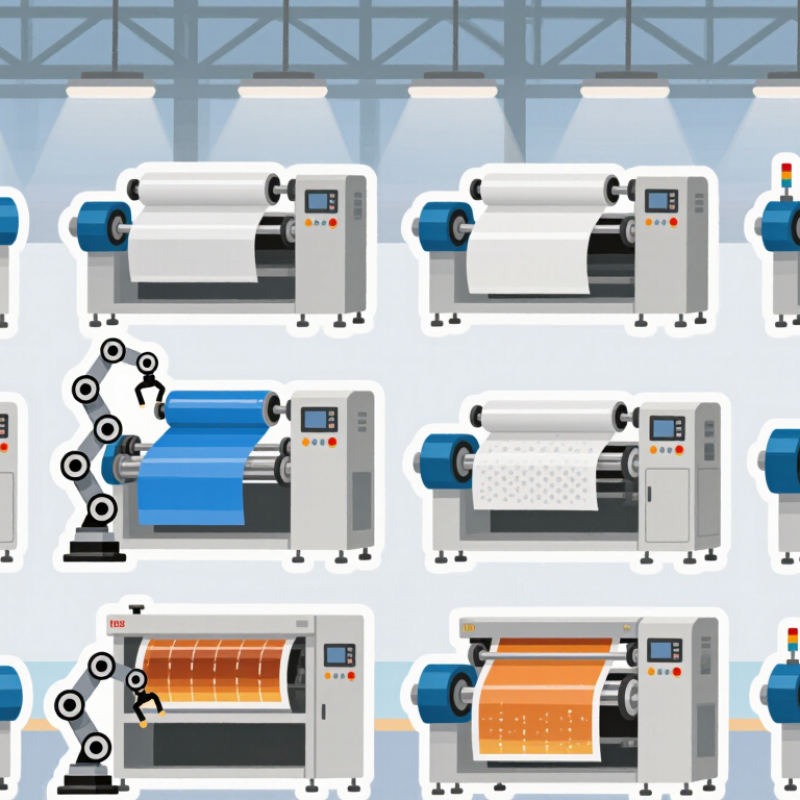
Coating machine manufacturing covers the design, production, and validation of equipment that applies a controlled layer to a surface. These layers may improve protection, appearance, conductivity, friction, or moisture resistance. A coating machine can serve films, paper, metal sheets, glass, textiles, or shaped components. Its scope includes feeding systems, coating heads, drying units, tension controls, inspection devices, and software.
Manufacturers also develop slot-die, roll, spray, dip, and curtain coating systems. Each method requires different control of viscosity, speed, temperature, and wet-film thickness. Practical engineering matters here. A small alignment error can create streaks across a wide web. Production teams therefore test uniformity, cleaning time, energy use, and operator safety before acceptance. The boundary is not always clean. Some machines combine coating with laminating, printing, curing, or slitting, so classification may depend on the primary function.
Tips: Define the substrate before comparing equipment. Check coating width, line speed, material viscosity, and target thickness. Request trial data under realistic conditions. Ask how the machine handles start-up waste and uneven surfaces. Confirm measurement accuracy, maintenance access, and spare-part support. A specification sheet may look complete, yet it can hide difficult changeovers. Review sample results carefully. Even experienced buyers can overlook cleaning downtime.
Modern coating machines combine precision mechanics, controlled chemistry, and real-time inspection. Slot-die systems meter liquid through a narrow head, often within micrometer-level tolerances. Gravure and reverse-roll methods remain useful for high-speed web production. According to the International Energy Agency’s Global EV Outlook 2024, battery demand exceeded 750 GWh in 2023, increasing pressure on manufacturers to coat electrodes evenly and reduce material waste.
Vacuum deposition adds another layer of capability. Sputtering and evaporation can create thin protective or conductive films inside sealed chambers. Plasma treatment improves surface energy before coating, helping liquids spread across polymer films and metal foils. Ultraviolet and electron-beam curing shorten drying zones, while reducing solvent dependence. The Smithers report The Future of Functional and Barrier Coatings to 2029 identifies barrier performance, lightweight packaging, and production efficiency as major technology drivers.
Measurement is becoming central. Optical cameras detect streaks, pinholes, and edge defects while the web moves at high speed. Infrared sensors estimate coating moisture, and machine-learning software can flag drift before operators see a visible fault. Useful, but not perfect. A dirty lens can produce confident errors. In my experience, stable tension control often matters as much as advanced software. A practical line may combine closed-loop thickness control, automatic viscosity adjustment, and a clean, accessible inspection station. Small details matter.
Top 10 Coating Machine Manufacturers Worldwide
Criteria for Comparing Global Coating Machine Manufacturers
A credible comparison starts with measurable coating performance, not catalogue claims. Evaluate thickness variation across the web, line speed, drying capacity, and substrate range. The International Energy Agency reports that industry consumes about 37% of global final energy. Therefore, thermal efficiency deserves equal attention. Ask for production data from materials similar to yours.
MarketsandMarkets estimates the global coating equipment market will grow from roughly USD 19 billion in 2024 to more than USD 25 billion by 2029. This expansion increases supplier choice, but also complicates evaluation. Compare quoted output with verified uptime, changeover time, solvent recovery, and reject rates. A machine running at 200 metres per minute is not efficient if quality losses reach five percent.
Look beyond the purchase price. A useful comparison includes maintenance access, spare-parts availability, operator training, software support, and regional service coverage. Request factory acceptance records and independent test results. ISO 9001 certification can indicate process discipline, but it does not guarantee coating quality. That assumption needs challenging. Total cost should include energy, consumables, downtime, and skilled labour over at least five years. Safety documentation, emissions controls, and compliance with local machinery standards also require review. Small details matter: illuminated inspection zones, cleanable pumps, and clear alarm histories often reveal practical engineering quality.
Top 10 Coating Machine Manufacturers Worldwide
Top 10 Coating Machine Manufacturers Worldwide is useful only when “top” means measurable performance, not loud promotion. The strongest manufacturers usually demonstrate stable coating weight, accurate web tension, and repeatable drying results. In factory trials, I would inspect a coated roll under direct light. Streaks, edge build-up, or pinholes reveal more than a polished brochure. Ask for production data from similar materials, not laboratory samples alone. A reliable supplier explains tolerances, maintenance intervals, and operator training in plain language. That practical openness signals expertise.
Machine design should match the coating method, substrate, line speed, and safety requirements. Slot-die systems may suit precise thin layers, while gravure or knife systems can fit different viscosities and production goals. Check pump stability, heated zones, exhaust control, inspection cameras, and cleaning access. Spare-part availability matters worldwide, especially when one sensor can stop a night shift. Some manufacturers appear impressive online but provide vague service commitments. That is a warning worth recording.
Tips: Request a live demonstration with your actual material. Measure coating thickness across the web, not only at the center. Compare energy use, changeover time, waste, and documentation. Speak with two existing users, if possible. Leave room for doubt. A machine can pass a trial and still disappoint after installation. Review acceptance criteria with an independent engineer before signing, because small omissions become expensive corrections.
This non-brand comparison uses an anonymized technology coverage index based on commonly documented coating-machine capabilities, including slot-die, gravure, reverse-roll, knife, curtain, spray, and multilayer coating systems.
The index compares publicly observable product and application coverage rather than revenue, installed capacity, or company valuation. A higher score indicates broader documented coverage across coating methods, substrates, and industrial applications.
The global coating equipment market is moving from volume growth toward measurable process control. According to the International Energy Agency’s Global EV Outlook 2024, electric-car battery demand exceeded 750 GWh in 2023, increasing by about 40% year on year. That expansion is reshaping coating lines for electrodes, films, and separators. Manufacturers now prioritize uniform thickness, lower solvent use, and faster material changeovers. Small defects can still cause expensive scrap.
Data quality matters more than marketing claims. The U.S. Department of Energy’s Industrial Decarbonization Roadmap identifies process efficiency, electrification, and waste reduction as major industrial priorities. Consequently, newer machines increasingly combine infrared or induction drying with closed-loop airflow control. Inline cameras inspect streaks, pinholes, and edge buildup while software adjusts coating speed in real time. Practical gains are visible on the factory floor. A stable web tension system prevents wrinkles before they reach the dryer.
Automation is not a complete answer. It can also magnify poor settings. The SEMI World Fab Forecast continues to show strong investment in advanced manufacturing capacity, but equipment suppliers must support skilled operators, cybersecurity, and maintainable designs. Energy consumption should be measured per coated square meter, not only per production hour. That comparison is often missing. Future competition among the top ten coating machine manufacturers will likely depend on flexible platforms, verified emissions data, and reliable performance across recycled or bio-based materials. The industry still needs better independent testing.