
Email Id: sale@adctooling.com
China Best Infrared Laser Diode Suppliers? This question deserves more than a simple supplier list. A dependable partner must combine stable production, accurate specifications, responsive engineering support, and traceable quality control. Buyers should examine wavelength ranges, optical output, threshold current, beam divergence, package design, and operating temperature. These details affect real performance.
Federico Capasso, a pioneer in infrared photonics, described the quantum cascade laser as “a completely new type of laser.” His observation highlights an important point: infrared technology is highly specialized, not interchangeable. A diode that performs well in a laboratory may fail in a dusty factory, a compact sensor, or a continuously operating system. Practical testing matters.
China offers many capable manufacturers, but quality varies between suppliers. Look for documented aging tests, batch records, sample approval procedures, and clear warranty terms. Ask whether the supplier measures power after temperature cycling. Ask for the actual test report, not only a polished brochure. Small details reveal technical maturity.
The strongest suppliers explain limitations honestly. That matters. They should discuss thermal drift, lifetime expectations, delivery risks, and compliance requirements without exaggeration. Certifications can support trust, but they do not replace independent verification. This guide compares leading Chinese Infrared Laser Diode suppliers through technical capability, manufacturing experience, customization, communication, and after-sales reliability. Some conclusions may remain imperfect, because supplier performance can change with time, volume, and application conditions.
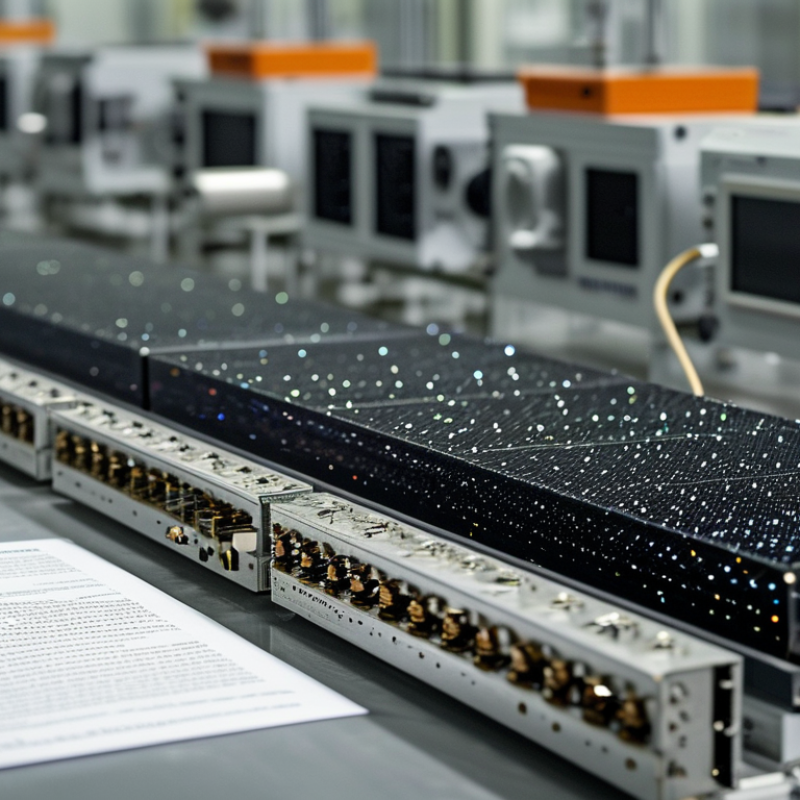
China Best Infrared Laser Diode Suppliers?
Infrared laser diodes commonly cover 780–1550 nm. The 780–980 nm range often uses gallium arsenide or aluminum gallium arsenide. These materials support efficient emission and compact packages. Around 1310 and 1550 nm, indium phosphide and indium gallium arsenide phosphide become more suitable. Their lower transmission loss supports optical communications and sensing. According to the MarketsandMarkets Laser Diode Market report, telecommunications and industrial applications remain major demand areas through 2029.
Wavelength changes performance. A 780 nm diode can read optical media and support laboratory instruments. A 940 nm device suits imaging, illumination, and short-range sensing. At 1310 nm, fiber transmission becomes practical. Near 1550 nm, atmospheric and eye-safety considerations can improve system design, but output power still requires strict control. Yole Group’s 2024 lidar analysis notes continuing interest in longer-wavelength systems, especially for extended sensing distances. The details matter.
Supplier evaluation should include wavelength tolerance, spectral width, slope efficiency, lifetime testing, and thermal resistance. Ask for test conditions, not only headline power. A diode rated at 200 mW may behave differently at 25°C and 70°C. This is where many comparisons become weak. In practical sourcing, I would also inspect burn-in records, packaging cleanliness, and coupling alignment. Not every low-cost specification is unreliable, but incomplete data deserves careful questioning.购彩官网
China’s infrared laser diode market is becoming more application-specific. At 850 nm, suppliers mainly serve short-reach optical links, industrial sensors, and machine-vision modules. Yole Group’s 2024 VCSEL market analysis identifies datacom as a leading VCSEL application, with 850 nm remaining important in multimode fiber systems. Buyers should verify beam divergence, modulation bandwidth, thermal drift, and production yield—not only the headline optical power.
940 nm is widely used in depth cameras, biometric equipment, remote controls, and night-vision illumination. MarketsandMarkets’ 2024 3D sensing report links growing sensor adoption with demand for compact near-infrared emitters. In practice, a 940 nm diode can reduce visible red glow, but efficiency varies sharply with pulse width and package design. Small details matter. Suppliers should provide eye-safety test records, spectral tolerance, lifetime data, and samples from multiple production lots. I would not trust a single laboratory curve.
The 1310 nm range supports fiber communication, optical monitoring, and selected ranging systems. Omdia’s 2024 optical networking research continues to highlight 1310 nm as a key window for single-mode transmission and data-center upgrades. Chinese manufacturers with stable epitaxial growth and automated burn-in testing can be competitive here, especially for customized wavelengths and package formats. Yet price alone is a weak filter. Request IEC-based qualification evidence, humidity testing, solder-joint reliability, and traceable measurement methods before approving a supplier.
Infrared laser diodes are selected according to wavelength, detector sensitivity, transmission medium, eye-safety requirements, and application environment. The chart compares three widely used wavelength bands and their corresponding photon energy.
Common in machine vision, industrial sensing, short-range optical links, and some biometric systems.
Widely used for consumer electronics sensing, infrared illumination, depth sensing, and near-infrared imaging.
Important for fiber-optic communications, particularly the O-band, where chromatic dispersion is comparatively low.
Photon energy is calculated using E = 1240 / λ, where E is measured in electronvolts and λ is measured in nanometers. Actual product selection also depends on optical power, modulation speed, beam profile, package type, and regulatory requirements.
China Best Infrared Laser Diode Suppliers?
Supplier Evaluation: Output Power, Beam Divergence, TEC Stability, and Lifetime
Selecting an infrared laser diode supplier requires more than comparing price lists. Output power must match the application’s optical budget, not just the headline rating. Ask for continuous-wave power, pulse limits, and efficiency at the target temperature. Beam divergence also matters. A 10-degree difference can enlarge a spot by several millimeters after a short optical path. Yole Group’s 2024 VCSEL market analysis highlights the continuing importance of 850 nm devices in high-speed optical systems, where alignment and thermal control strongly affect performance.
TEC stability deserves direct measurement. During evaluation, record wavelength drift and case temperature while cycling power. A stable module should show repeatable readings, not one impressive laboratory result. Telcordia GR-468-CORE is widely referenced for optical-device reliability, including 2,000-hour accelerated life testing. However, that test is not a lifetime guarantee. Real service life depends on drive current, humidity, vibration, and heat sinking. This is where supplier documents can feel incomplete.
Tips: Request raw test data, not only certificates. Compare divergence at the same current. Check TEC response after repeated thermal cycles. Ask whether lifetime figures are measured or projected. A spreadsheet can still hide weak sampling. I would also inspect three production lots, because one carefully selected sample proves very little. Slight inconsistency is acceptable; unexplained inconsistency is not.
| Evaluation Dimension | Typical Industry Range | Preferred Supplier Capability | Recommended Acceptance Criteria | Evaluation Weight |
|---|---|---|---|---|
| Operating Wavelength | 780–850 nm, 905 nm, or 940–980 nm for common near-infrared applications | Specified center wavelength with documented tolerance, temperature coefficient, and spectral width | Center wavelength tolerance typically within ±3–5 nm, depending on product class | 10% |
| Output Power: Single-Mode CW | Approximately 5–150 mW | Stable power regulation with low-noise current control and production test records | Measured power should remain within ±5% of the rated value at the specified operating temperature | 15% |
| Output Power: Multimode CW | Approximately 0.5–10 W, depending on package and cooling method | Capability to provide thermal design data, derating curves, and power-versus-temperature testing | Rated output should be verified at the intended case temperature and duty cycle, not only at room temperature | 15% |
| Pulsed Peak Power | Approximately 10–100 W peak for short-pulse near-infrared modules | Defined pulse width, repetition rate, duty cycle, and optical peak-power measurement method | Peak power must be evaluated together with pulse width and repetition rate; peak power alone is not sufficient | 8% |
| Fast-Axis Beam Divergence | Typically 20–35° full angle for common edge-emitting diode packages | Consistent divergence data measured using a defined full-angle or half-angle convention | Tolerance typically within ±15% of the stated value; measurement convention must be documented | 10% |
| Slow-Axis Beam Divergence | Typically 8–12° full angle for standard edge-emitting structures | Beam-profile data at the rated current, temperature, and optical distance | Supplier should provide near-field and far-field beam measurements for production samples | 8% |
| Beam Quality and Astigmatism | Elliptical beam is common; beam quality depends strongly on emitter type and collimation | Provision of M², ellipticity, astigmatism, and collimated-beam data where applicable | Optical performance must match the application after the intended lens or fiber-coupling configuration | 8% |
| TEC Temperature Stability | Approximately ±0.1 to ±0.5°C for actively controlled modules | Closed-loop thermoelectric control with thermistor specification, control range, and response data | For wavelength-sensitive systems, target temperature stability of ±0.1°C or better under steady-state conditions | 12% |
| Thermal Resistance | Approximately 2–15°C/W, strongly dependent on package and mounting design | Defined thermal-resistance test method and mechanical mounting recommendations | Thermal design should keep junction or case temperature within the supplier’s rated limit at maximum duty cycle | 7% |
| Expected Operating Lifetime | More than 10,000 hours for qualified CW modules under specified conditions; pulsed devices are often rated by pulse count | Accelerated aging data, failure criteria, operating-temperature limits, and lifetime calculation method | Require lifetime data at the intended drive current, temperature, optical power, and duty cycle | 12% |
| Quality and Reliability Documentation | Datasheet, incoming inspection report, and basic production test data | Traceable lot records, optical and electrical test results, change-control process, and reliability reports | Prefer suppliers able to provide serial or lot traceability and a documented corrective-action process | 5% |
China’s infrared laser diode suppliers serve medical, sensing, security, and industrial applications. MarketsandMarkets estimated the global laser diode market at about USD 9.5 billion in 2023, with continued growth through 2028. This demand makes supplier screening more important than price comparison alone.
Packaging should match the operating environment. TO-can packages suit compact assemblies and moderate heat loads. Butterfly or C-mount packages offer stronger thermal control for continuous operation. Ask for wavelength tolerance, output power stability, beam divergence, and burn-in records. A supplier offering only a product photo is not enough. I would request cross-section images and lot-level test data.
Certification needs careful checking. IEC 60825-1 supports laser safety classification, while RoHS and REACH documentation helps confirm restricted-substance control. ISO 9001 can indicate process discipline, but it does not prove diode performance. The IEA reported that China remained the largest global manufacturing base for clean-energy hardware in 2023, reflecting strong electronics capacity, not automatic quality. MOQ often ranges from 10 to 100 units for standard packaged diodes, while custom wavelengths or housings may require several hundred pieces. Low MOQ sounds convenient. It may also signal limited customization or older inventory. Before ordering, compare sample traceability, shelf-life records, warranty terms, and inspection methods. Some datasheets still omit temperature-dependent power curves, which is a real weakness.
Selecting a China infrared laser diode supplier for a 905 nm LiDAR system requires more than comparing quotations. Yole Intelligence’s LiDAR for Automotive 2024 report identifies 905 nm as a widely adopted wavelength because of mature components and practical system costs. The IEA Global EV Outlook 2024 recorded nearly 14 million electric car sales in 2023. This growth increases demand for stable sensing components.
Ask for measured data, not marketing claims. Check peak optical power, pulse width, spectral tolerance, beam divergence, and thermal resistance. For a 905 nm diode, wavelength drift can affect receiver filtering and detection distance.
Request test results at realistic temperatures, such as -40°C and 85°C. Also review lifetime testing, lot traceability, and failure-analysis procedures. Small details matter.
Audit the supplier’s production controls in China. Confirm wafer sourcing, die inspection, assembly capacity, and outgoing inspection standards. IEC 60825-1 remains essential for laser safety evaluation, but it does not prove long-term product reliability.
A supplier should provide samples from multiple lots, not one carefully selected batch. I would not approve a vendor from price alone. Low cost may conceal weak thermal design or inconsistent packaging. That is where my judgment can fail. A factory visit, independent optical testing, and a written change-control agreement are safer evidence than polished presentations.