7 Best Steel Pipe Fittings Suppliers for Global Buyers

Global demand for reliable steel pipe fittings spans energy, construction, water treatment, and process industries. The World Steel Association reported nearly 1.9 billion tonnes of crude steel production in 2023. That figure reveals the enormous industrial base behind international piping supply chains. However, steel volume alone does not identify a dependable supplier. Buyers also need traceable materials, accurate dimensions, suitable finishes, and complete export documentation.

Recent studies from Grand View Research and MarketsandMarkets forecast continued growth across the global pipe fittings market. Their findings reflect expanding infrastructure investment and replacement demand. Yet market boundaries differ between reports. Some include plastic products, valves, or fabricated assemblies. This limitation deserves attention. A report can guide research, but it cannot replace supplier verification.

This guide examines seven steel pipe fittings suppliers for global buyers. The comparison considers manufacturing capacity, product range, material standards, certifications, inspection practices, and delivery performance. Particular attention goes to ASTM A234, ASME B16.9, ASME B16.5, EN 10253, and ISO 9001 alignment. Buyers should also request mill test certificates, dimensional reports, welding procedures, and recent inspection records. Small details matter, such as heat numbers stamped beside an elbow’s weld seam. They can determine whether documentation matches the delivered batch.

No supplier ranking is permanently perfect. Prices change. Lead times move. Regional service quality can vary. Therefore, this selection should support due diligence, not replace it. A polished website is useful, but verified production evidence matters more.
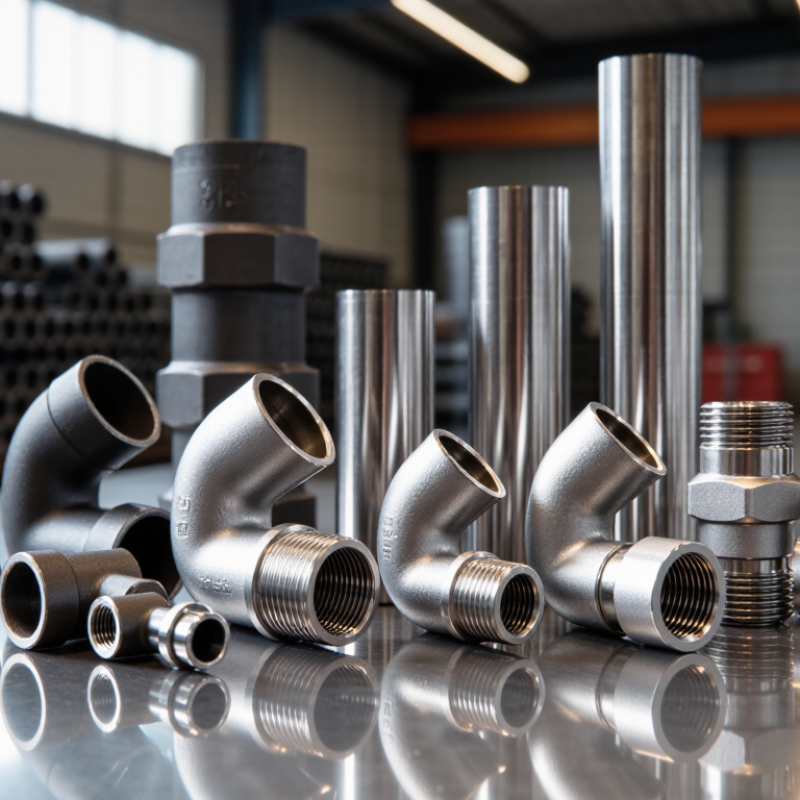
7 Best Steel Pipe Fittings Suppliers for Global Buyers

How Steel Pipe Fittings Suppliers Are Evaluated for Global Buyers

Global buyers should evaluate steel pipe fittings suppliers beyond product photos and low quotations.

A practical review starts with material control. Ask for heat numbers, mill certificates, chemical results, and mechanical test data.

The supplier should explain grades, dimensions, wall thickness, and applicable standards clearly.

Samples can reveal rough threads, uneven bevels, poor welds, or inconsistent coatings. Small details matter.

Production evidence is equally important.

Buyers should review inspection plans, pressure-test records, calibration documents, and batch traceability.

A factory audit can confirm whether equipment, storage, and quality checks match its claims.

Independent inspection may add cost, but it can reduce expensive surprises.

Export experience also matters. Check packing methods, moisture protection, labeling, container loading, and customs documentation.

Reliable suppliers communicate schedule changes early and answer technical questions with specific evidence.

Do not trust perfect promises.

Some suppliers provide strong samples but weaker mass production. That risk deserves attention.

A useful scorecard should compare quality consistency, certification validity, delivery performance, payment terms, and after-sales response.

It should also record weaknesses, not only strengths.

No evaluation method is flawless. However, transparent records and repeated verification provide a more dependable basis for long-term purchasing decisions.
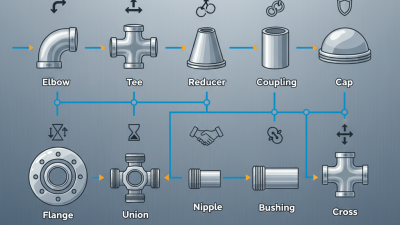
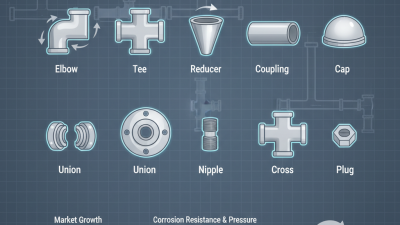
Seven Leading Steel Pipe Fittings Suppliers and Their Core Strengths

Global buyers need more than a long supplier list. They need evidence, process control, and dependable delivery. The World Steel Association reported 1.89 billion tonnes of crude steel production in 2023. That scale creates choice, but also inconsistent quality.

Seven supplier types deserve close attention. Integrated steel producers offer strong traceability and stable volume. Forged-fitting specialists support high-pressure applications. Welded-fitting manufacturers handle large diameters efficiently. Precision machining suppliers protect dimensional accuracy. Corrosion-control experts improve service life through coatings and material selection. Regional stockists shorten delivery times. Project-qualified manufacturers provide complete documentation for complex installations.

Look closely.

A credible supplier should provide heat numbers, mill test certificates, pressure-test records, and inspection plans. EN 10204 3.1 documents and applicable ASTM or ASME standards strengthen buyer confidence. The OECD Steel Outlook 2024 also highlights continuing pressure from excess capacity and changing demand. Low prices, therefore, may hide weaker utilization, delayed production, or reduced inspection.

A practical audit should examine factory equipment, welding qualifications, non-destructive testing, and packaging for sea transport. Ask how rejected fittings are isolated. Ask for recent batch records, not sample paperwork. Supplier ranking remains imperfect. Local regulations, port distance, and emergency stock can change the best choice. A technically excellent factory may still fail a project through poor communication.

7 Best Steel Pipe Fittings Suppliers for Global Buyers - Seven Leading Steel Pipe Fittings Suppliers and Their Core Strengths

Comparative overview of seven anonymous supplier profiles based on manufacturing focus, commonly supported standards, export capability, and buyer applications.

Rank Anonymous Supplier Profile Primary Production Base Core Product Range Commonly Supported Standards Core Strengths Typical Buyer Industries Common Export Markets
1 Supplier Profile 01 China Butt-weld elbows Tees Reducers Caps ASME B16.9, ASTM A234, ASTM A403, EN 10253 Broad production capacity, extensive material availability, competitive pricing, and strong OEM or private-label support. Oil and gas, petrochemical, power generation, construction, and water infrastructure. North America, Europe, Southeast Asia, the Middle East, Africa, and South America.
2 Supplier Profile 02 India Carbon-steel fittings Stainless-steel fittings Forged fittings ASME B16.9, ASME B16.11, ASTM A105, ASTM A182, ASTM A234 Flexible batch sizes, wide alloy selection, project documentation, and experience with engineered and standard piping orders. Refining, chemical processing, pharmaceutical, food processing, and industrial fabrication. Europe, the United States, the Gulf region, Australia, and Southeast Asia.
3 Supplier Profile 03 Turkey Welded fittings Seamless fittings Large-diameter fittings EN 10253, EN 10204, DIN 2605, ASME B16.9 Shorter delivery routes to Europe, practical stock programs, European-standard familiarity, and responsive project coordination. District heating, water treatment, HVAC, general engineering, and energy infrastructure. European Union, the Balkans, North Africa, the Middle East, and Central Asia.
4 Supplier Profile 04 Italy Precision elbows Instrumentation fittings Stainless-steel components EN 10253, EN 10204, ASTM A403, ISO 9001 quality systems High dimensional consistency, surface-finish control, traceability, and suitability for demanding European industrial applications. Food and beverage, chemical, pharmaceutical, process equipment, and high-specification mechanical systems. Europe, North America, the Middle East, and selected Asian markets.
5 Supplier Profile 05 South Korea High-pressure fittings Alloy-steel fittings Stainless-steel fittings ASME B16.9, ASME B16.11, ASTM A182, ASTM A234, JIS standards Reliable process control, strong metallurgy capabilities, consistent production quality, and support for energy-sector specifications. Shipbuilding, offshore engineering, power plants, petrochemical facilities, and heavy industry. East Asia, Southeast Asia, the Middle East, Europe, and North America.
6 Supplier Profile 06 Germany Industrial elbows Fabricated fittings Special-alloy fittings EN 10253, DIN standards, EN 10204, AD 2000-related documentation where applicable Engineering precision, advanced inspection practices, material traceability, and strong support for safety-critical applications. Industrial machinery, chemical plants, energy systems, automotive manufacturing, and process engineering. Europe, North America, the Middle East, and high-specification global projects.
7 Supplier Profile 07 United Arab Emirates Stocked carbon-steel fittings Stainless-steel fittings Project packages ASME B16.9, ASTM A234, ASTM A403, EN 10253 Regional inventory, rapid quotation, consolidation of multi-item orders, and convenient logistics for Middle Eastern projects. Oil and gas, desalination, construction, utilities, marine services, and maintenance projects. Gulf Cooperation Council countries, North Africa, East Africa, South Asia, and Central Asia.

Note: Standards, materials, dimensions, certifications, lead times, and export availability vary by product and purchase order. Buyers should verify current mill certificates, inspection reports, compliance documents, and applicable project specifications before placing an order.

Product Standards, Materials, Sizes, and Customization Options

7 Best Steel Pipe Fittings Suppliers for Global Buyers

Product Standards, Materials, Sizes, and Customization Options

Selecting reliable steel pipe fittings suppliers requires more than comparing prices. Experienced buyers check standards, test records, and production consistency. Common references include ASME B16.5 for flanges and ASME B16.9 for butt-weld fittings. European projects may require EN 10253 compliance. Suppliers should clearly identify applicable standards for each product, not place every item under one certificate.

Material choice depends on temperature, pressure, corrosion exposure, and installation conditions. Carbon steel suits many general industrial lines. Stainless steel performs better in corrosive environments. Alloy steel supports demanding heat and pressure applications. Duplex grades can offer strength and improved corrosion resistance, but they require careful welding control. Always request material certificates, heat numbers, and chemical analysis. A polished certificate alone proves little.

Size ranges often cover NPS 1/2 to NPS 48, with wall thicknesses based on schedules or project drawings. Pressure classes may range from 150 to 2500. Custom options include unusual radii, special bevels, forged outlets, coatings, and reinforced branches. Suppliers should provide dimensional inspection reports and, when required, PMI or hydrostatic test results. I once underestimated packaging details; damaged end faces delayed installation. Strong suppliers use caps, separators, and moisture control during long-distance shipping. Small details matter.

Quality Control, Certifications, Pricing, and International Logistics

7 Best Steel Pipe Fittings Suppliers for Global Buyers

Reliable suppliers show quality control in records, not promises. Ask for heat numbers, inspection reports, and material certificates for every shipment. A capable factory should trace each fitting from raw steel to final packing.

Dimensional checks must cover wall thickness, diameter, bevel angle, and surface condition. For pressure applications, request appropriate testing evidence. Independent pre-shipment inspection adds confidence, although it cannot replace a supplier audit.

Certifications need careful review. ISO 9001 indicates a quality management system, but it does not guarantee perfect products. EN 10204 3.1 certificates can support material traceability when issued correctly.

Buyers should match certificates with the destination market, project specification, and required standards. Check certificate numbers, validity dates, and testing laboratories.

Small errors matter. An outdated document may delay customs or project approval.

Pricing should include more than the unit cost. Compare tooling, inspection, packaging, inland transport, duties, and ocean freight. Request quotations under the same Incoterm.

A cheaper offer may use thinner packaging or exclude necessary tests. International logistics require strong export cartons, moisture protection, accurate marks, and complete commercial documents.

Confirm HS codes, country of origin, lead time, and port handling responsibilities in writing. I have seen delays caused by one missing packing detail. That is easy to overlook.

Allow buffer time, especially during peak shipping seasons, and review delivery performance rather than trusting a single successful order.

How to Select the Right Steel Pipe Fittings Supplier for Your Project

Choosing among the seven best steel pipe fittings suppliers requires more than comparing prices. Start with the project’s pressure class, temperature range, pipe schedule, fluid type, and connection standard. A supplier should clearly match these details with ASME, ASTM, EN, or ISO requirements. Ask for heat numbers, material certificates, dimensional reports, and hydrostatic or radiographic test records. Do not accept vague claims.

Market scale can mislead buyers. The World Steel Association reported 1,892.2 million tonnes of crude steel production in 2023, showing a vast supply base. It does not prove consistent fitting quality. Request a recent production sample, then inspect welds, threads, wall thickness, coating, and end protection. Small defects matter. One damaged bevel can delay installation.

Supplier audits should examine calibration systems, nonconformance records, packing methods, and corrective actions. ISO’s Survey of ISO 9001 certifications reported 1,265,216 valid certificates worldwide at the end of 2022. Certification is useful evidence, not a complete guarantee. I would also verify certificate scope and expiration dates. A supplier with strong paperwork may still struggle with export packing or delivery accuracy. Compare lead times using the same Incoterm, quantity, and inspection level. Include replacement rules for rejected fittings. Cheap quotes often exclude testing, marking, or corrosion protection. That mistake is costly.

7 Best Steel Pipe Fittings Suppliers for Global Buyers

How to Select the Right Steel Pipe Fittings Supplier for Your Project

The chart shows the outside diameters for selected nominal pipe sizes commonly used with butt-welding fittings. Buyers should confirm dimensional compatibility, material certification, wall thickness, pressure requirements, and inspection documentation before selecting a supplier.

Data reference: ASME B16.9 standard nominal pipe size and outside diameter values.